No matter what you’re transporting, food, consumer goods, building materials, or anything else, a proper trailer washout protects your cargo and keeps your truck looking its best. Different types of trailers may need different cleaning methods, but a few key tips can help reduce contamination risks and keep your vehicle ready for the next job. Here are the dos and don’ts every trucking professional should know.
Do Clean the Trailer Between Every Cargo Change
Always clean the trailer whenever you switch cargo. This matters most for dry van trailers, like when you’re transporting furniture on one trip and packaged goods the next. Getting rid of dust, debris, and leftover residue between loads is a simple step that helps protect whatever you’re hauling next.
Don’t Skip Washouts to Save Time
When you’re busy and schedules are tight, you might want to skip a trailer washout and get on to the next job. But saving a few minutes now can quickly lead to cargo contamination issues, customer complaints, and costly delays. Taking a little extra time to clean your trailer can help keep operations running smoothly.
Do Use the Right Cleaning Method for Your Trailer
Not all trailers need to follow the same cleaning schedule. For example, dry vans usually just need debris removed and a regular washout between loads. Refrigerated trailers (reefers) will need a deeper clean to meet food safety standards.
Livestock and agricultural trailers must be properly sanitized to get rid of organic matter and lower the risk of spreading disease. Even flatbed trailers benefit from regular washing to remove mud, road salt, grease, and chemicals that can cause rust and wear.
Steam cleaning can be a good choice, depending on your trailer and what you’re hauling. High-temperature steam helps loosen tough grime, sanitizes surfaces, and kills bacteria, while using much less water than regular washing. This method is especially helpful for refrigerated trailers or whenever you need to keep things extra clean.
Don’t Assume a Quick Hose-Down is Enough
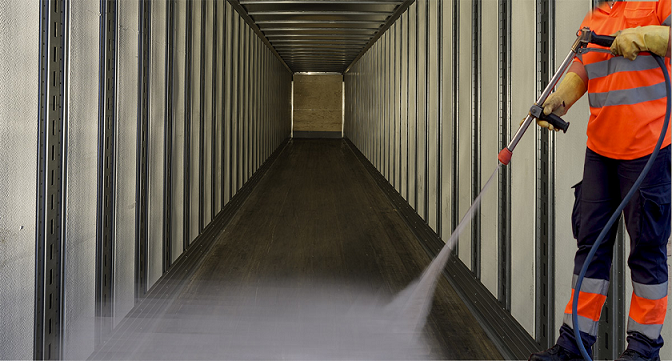
If you have a lot going on, it’s tempting to rinse your trailer and hit the road. However, water alone usually won’t get rid of grease, stains, bacteria, sticky spots, or ground-in dirt. Pressure washing can help, but it’s important to know when you need more than that. A good clean should include:
- Sweeping out loose debris.
- Pre-rinsing surfaces.
- Applying an appropriate cleaning solution.
- Allowing dwell time for the cleaner to work.
- Pressure washing all surfaces.
- Do a final rinse.
Taking these extra steps will help you clean the trailer more thoroughly and reduce the risk of contamination.

Do Inspect Every Corner and Crevice
Refrigerated trailers often require extra attention during a washout. Moisture, condensation, and food bits can build up under floor slats and in hard-to-reach spots, making it easy for mold and bacteria to grow. So, always check and clean hidden areas thoroughly.
Don’t Ignore Odors
Always get to the source of persistent odors rather than simply masking them. Bad smells can be a major issue, especially if you’re transporting food, beverages, pharmaceuticals, or consumer products.
Unpleasant odors from things like seafood, produce, chemicals, or livestock can transfer to future loads. If this is still a problem after a standard clean, professional sanitizing methods may be necessary.
Do Use Cargo-Safe Cleaning Products
Picking the right truck cleaning products is important. Harsh chemicals that leave residues behind can damage cargo. Instead, use cleaning solutions made for trucks and cargo areas. Look for products that are:
- Biodegradable.
- Non-toxic.
- Easy to rinse away.
- Food-safe when required.
- Environmentally responsible.
Check out 10 truck cleaning products for more details. Also, make sure to rinse well so no residue is left behind. This extra attention to detail makes all the difference.
Don’t Load Cargo Before the Trailer Is Dry
Allowing the trailer to dry completely is just as important as the washout itself. Otherwise, you’re asking for problems like:
- Mold growth.
- Mildew formation.
- Damaged packaging.
- Product spoilage.
- Slipping hazards.
So, before loading new cargo, inspect the trailer to ensure all surfaces are clean, dry, and ready for the road again.
Do Document Trailer Washouts
Keeping track of your cleaning schedule shows you’re being responsible and adhering to health and safety regulations. Documentation can also provide valuable protection if questions arise about cargo contamination or cleanliness.
Don’t Rush Through Inspections
After you finish washing out the trailer, take a moment for a final inspection. Look at floor seams, wall joints, door tracks, and other hidden areas for any leftover debris, moisture, or odors. Small oversights can cause problems when you’re hauling sensitive cargo.
Do Schedule Regular Deep Cleaning
Washing out trailers between loads is important, but deep cleaning every month or two matters just as much. Deep cleaning helps remove:
- Embedded grime.
- Grease buildup.
- Stubborn stains.
- Bacterial contamination.
- Long-term odors.
Using brushes, special tools, or hiring professional cleaning services can bring your trailer back to a higher level of cleanliness. For more tips, see how to deep clean your truck.
Don’t Wait for Problems to Appear
Don’t be one of the companies that only prioritize cleaning after receiving complaints about dirty trucks. Make cleaning part of your regular maintenance routine. Staying ahead with washouts protects your business reputation and helps you avoid rejected loads and costly disputes.
Do Hire a Professional When Needed
If you’re short on time, don’t have the proper equipment, or just want peace of mind, hiring a commercial truck cleaning service could be your best bet. Professional cleaners have the tools, experience, and products needed to thoroughly remove dirt, debris, odors, and contaminants from your trailer.
This can be especially beneficial if you haul food, need to meet strict cleanliness standards, or have an inspection coming up. Outsourcing trailer washouts lets you focus on your business and keeping your trucks moving, instead of worrying about cleaning. Before you pick a provider, look into a mobile truck wash service to see if it’s the right fit for your fleet.
Conclusion
A regular trailer washout routine is a key part of fleet maintenance. Knowing the key dos and don’ts makes the job easier and more effective. Whether you handle the job in-house or hire a professional service, staying consistent is what matters most.
If you need some help, DetailXPerts uses eco-friendly steam cleaning technology to remove dirt, grime, and contaminants while using way less water than traditional cleaning methods. Our mobile truck and fleet cleaning services can help keep your trailers clean, cargo-ready, and looking great.
Download our free guide, Everything a Manager Needs to Consider When Hiring a Fleet Cleaning Company.